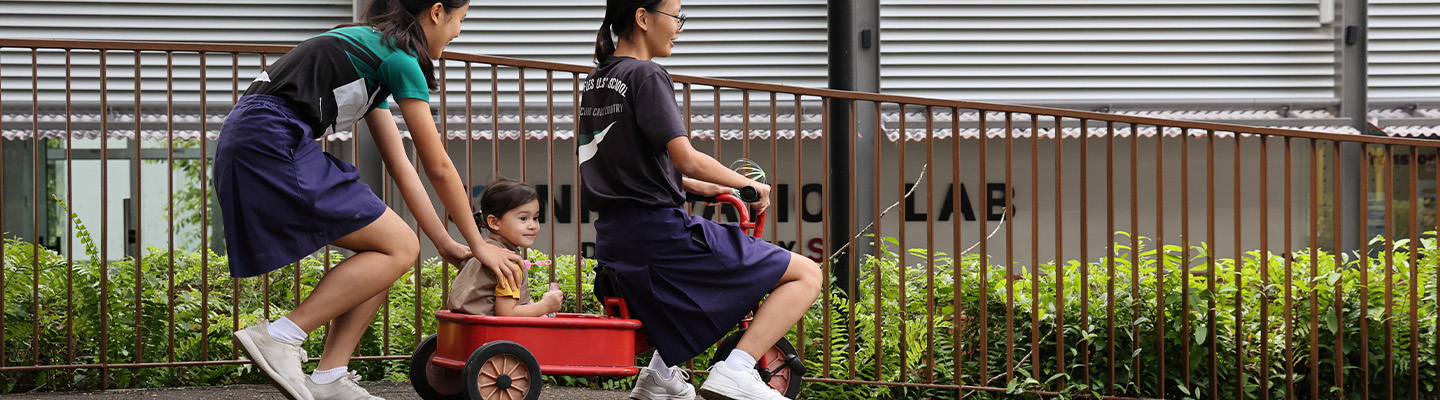
On the playground of an inclusive preschool, a small, non-verbal boy took two teenage visitors by the hand. He led them to a communication board, tapped a symbol, and beamed with excitement.
There was no classroom lecture on disability etiquette or checklist of the “right” thing to do. The moment happened because the students were present and not preoccupied with getting the interaction “right”. It pointed to something often overlooked: while awareness laid the foundation, it was meaningful interaction that dissolved the uncertainty and social awkwardness that could surround disability.
This philosophy underpinned four youth co-design programmes supported by i’mable, SG Enable’s public education movement, in collaboration with DesignSingapore Council’s Learning by Design: Real World Co-Design Platform. Through partnerships with Creativeans, Orcadesign, Design Exchange and Forest & Whale, students worked alongside persons with disabilities as teammates and co-designers, drawing on lived experiences to solve real-world challenges together.
Beyond the checklist
To build a mindset that outlasts a school semester, students first have to unpack what inclusion means.
Ask any mainstream student what inclusion looks like, and the answers come with rapid-fire certainty: ramps, lifts, and wheelchair-friendly toilets. These are important features of accessibility, but they represent only one aspect of inclusion.
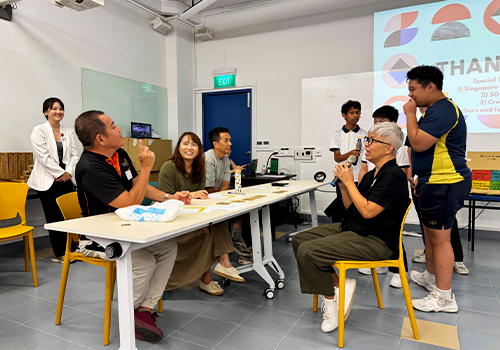
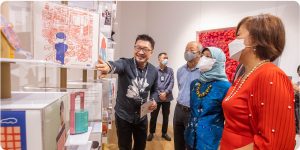
A Hougang Secondary student received feedback after his presentation, gaining first-hand insight from a person with a disability on how practical and meaningful the team’s idea could be in real life.
This gap became clear in Creativeans’ programme with Hougang Secondary School, where students worked with the deaf and hard-of-hearing community to co-design ways to help their peers better understand the community and their everyday experiences. The early sessions surfaced a similar pattern. Students arrived confident in their answers, only to realise through conversations and shared experiences the areas they had overlooked.

“Learning about a community is not only within the classroom,” says Kimming Yap, Managing Director of Creativeans. “You have to interact with real people, the real environment, the real community.”
Through interaction and sharing of lived experiences by members of SADeaf, they realised that accessibility means more than just building wheelchair ramps. They recognised a fresh challenge that they didn’t before, how easily a deaf person can be left out simply because a conversation moves too fast or a joke gets missed.
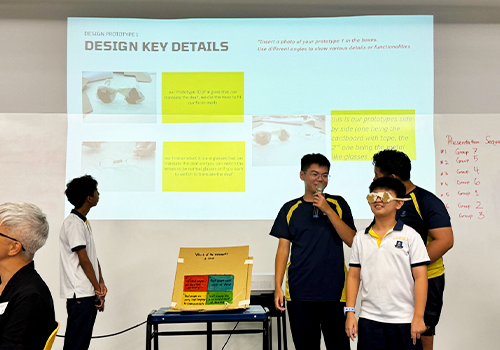
Hougang Secondary students presented their final ideas aimed at bridging communication gaps, rather than simply building ramps.
Designing from the inside out
Once students see that barriers are human rather than structural, they must confront their own subconscious assumptions.
This is the premise of Orcadesign’s Journey Bright project. Before designing solutions, the students from Rulang Primary School were introduced to environments where their usual ways of navigating the world were unavailable. In Dialogue in the Dark, they navigated everyday spaces entirely through sound, touch, and spatial intuition. As Jeremy Sun, Project Lead of Journey Bright, explained, this brought up “underlying assumptions” that would otherwise shape a design without anyone noticing.
“Our early ideas were shaped almost entirely by assumptions,”
one student admitted. It was only after working directly with mentors with visual impairment that those ideas were enriched by new perspectives and lived experiences, opening up new possibilities for their prototypes. Instead of developing a standard navigation tool, one group created “Visipoly” — a tactile version of Monopoly. The experience led the student designer to reflect and share that, in designing for inclusion,
“kindness is not enough. Empathy is important.”
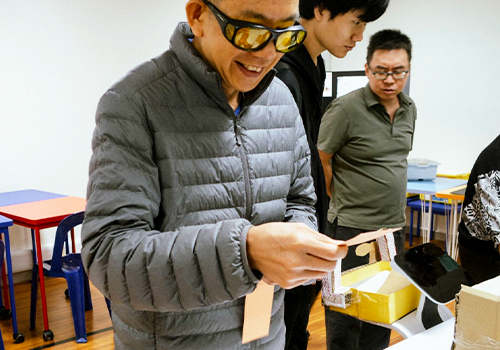
Mentors with visual impairment also became judges and assessed the prototypes at the final presentation.
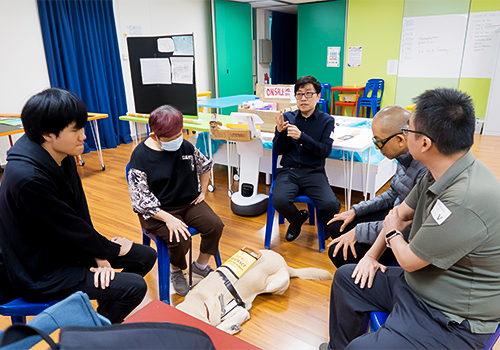
Orcadesign’s Journey Bright helped students turn moments of uncertainty into more thoughtful, user-centred ideas.
Finding common ground through co-creation
Sometimes, the easiest way to find common ground is to build something together. During Design Exchange’s Walk Your Way co-design programme, students from Commonwealth Secondary School partnered with students with mild intellectual disabilities and autism from APSN Delta Senior School to co-design solutions for everyday challenges faced by students.
Early on, one Deltan spoke very little, while some of the other students were worried about saying the wrong thing. The dynamic changed once the teams began working on their ideas. Their attention shifted from their differences to the problem they were trying to solve as a team. Students adapted their pace to one another, while the Deltans contributed ideas and advocated for what they wanted to see in the designs. Working towards the same goal also revealed unexpected common ground. One Commonwealthian noticed that a Deltan classmate was uncomfortable with loud noises, and she felt the same way. “It made it easier to empathise with him,” she said.
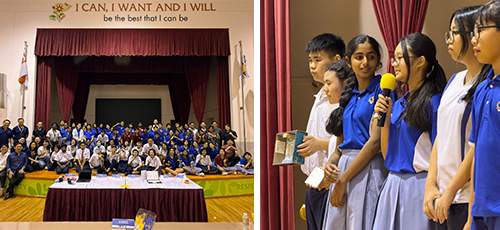
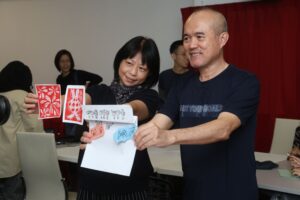
Commonwealthian and Deltans presented at the final project showcase.
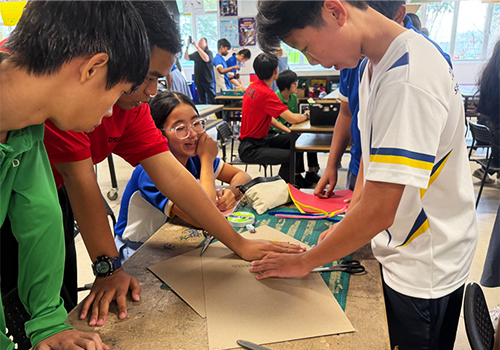
Commonwealthian and Deltans got hands-on as they brought their prototypes to life.
For the Deltans, co-creation also meant having their ideas heard and acted on. One student reflected: “I enjoy working in a team and sharing my ideas… It made me happy when my friends listened to me and when our ideas were chosen.”
This sense of shared ownership was central to the programme. Students were not simply learning about one another; they were creating something together, with each person bringing their own experiences and ideas to the process. “We didn’t want our students to feel like beneficiaries,” said Edmund Liew, Vice Principal of APSN Delta Senior School.
“We wanted them to know they could contribute as co-creators.”
Shedding the fear of fragility
When the environment is right, the distinctions stop mattering. During Forest & Whale’s Inclusive Play Lab, students from Raffles Girls’ School co-designed board games in inclusive preschools and care homes, with ideas coming from all sides of the table. They arrived thinking they had to be mindful of what to say, when to help, or whether helping too much might get in the way.
The two-day masterclass gave them a way through that uncertainty. Instead of learning about inclusion from a distance, students worked with AWWA Kindle Garden and AWWA Home, learning directly from children, residents, educators and care teams across different life stages and support needs. Through participatory play, tactile exploration and real-world community visits, they began translating what they observed into game ideas, play mechanisms and sensory tools that could help make inclusion feel more natural.
That was what the playground moment brought to life. Once the child started the game, the students realised they did not have to get every word or action exactly right. They just had to be present and join in the fun.
“At first we thought we had to be very careful,” one student reflected. But actually, they’re not fragile.
“We could just treat them like anyone else.”
The shift was simple, but important. The students began to see that interacting with persons with disabilities did not always require extra caution. Sometimes, it simply meant joining in the fun and treating the moment like any other shared experience.
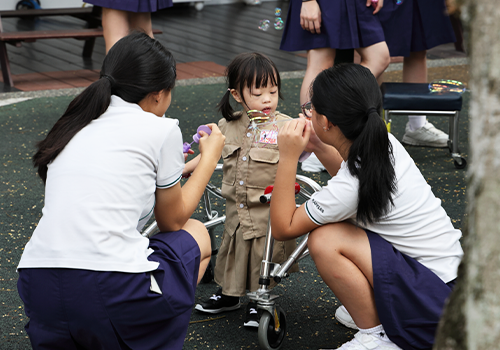
Natural, unscripted moments on the playground showed that children did not need special rules to play together.
Taking inclusion beyond the classroom
Across all four programmes, students became more attentive to who was included in conversations, whose perspectives were missing, and how small adjustments could make participation easier for everyone.
These are subtle changes, but meaningful ones. Inclusion shifts from being an abstract value to a habit of noticing, listening and designing with others rather than for them.
The real opportunity lies beyond the programmes themselves. Every future school project, workplace, community event or neighbourhood interaction becomes another chance to put these habits into practice. While not every environment is intentionally designed for inclusion, every interaction offers a choice about how we respond.
Mindsets do not change overnight. But they do change through repeated experiences. By creating opportunities for young people to collaborate meaningfully with persons with disabilities, these programmes plant something that can continue to grow long after the prototypes are packed away—not just better ideas, but a generation more comfortable working, learning and living alongside one another.